Epstein's Manhattan Home Exposed: How The Rich And Famous Engaged In Depraved Acts Behind Closed Doors
What secrets lurk behind the gilded doors of Manhattan's most notorious townhouse? The lavish residence at 9 East 71st Street, once home to the disgraced financier Jeffrey Epstein, has become a symbol of wealth, power, and the dark underbelly of privilege. As new details continue to emerge about the peculiar contents and visitors to this opulent mansion, we're forced to confront uncomfortable questions about the intersection of money, influence, and moral decay in America's elite circles.
Jeffrey Epstein: A Brief Biography
Jeffrey Edward Epstein was born on January 20, 1953, in Brooklyn, New York. He rose from humble beginnings to become one of the most notorious figures in modern American history.
| Personal Details | Information |
|---|---|
| Full Name | Jeffrey Edward Epstein |
| Date of Birth | January 20, 1953 |
| Place of Birth | Brooklyn, New York |
| Date of Death | August 10, 2019 |
| Place of Death | Metropolitan Correctional Center, New York City |
| Education | Cooper Union (dropped out), Courant Institute of Mathematical Sciences at NYU (attended briefly) |
| Occupation | Financier, convicted sex offender |
| Net Worth (estimated) | $577 million (at time of death) |
Inside Epstein's Lavish Manhattan Townhouse
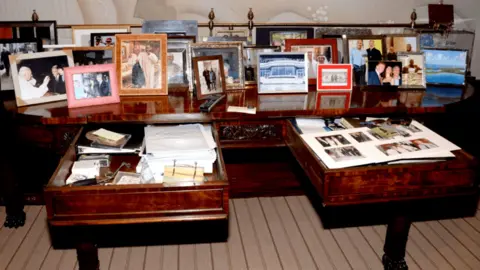
The late sex offender's New York mansion close to Central Park contained peculiar items that seemed to reflect his twisted interests and connections to the wealthy elite. Among the most shocking discoveries were a stuffed tiger, a first edition of Vladimir Nabokov's controversial novel Lolita, and photographs featuring Epstein alongside former President Donald Trump.
These items, revealed through previously unseen letters and photographs published by the New York Times, paint a disturbing picture of Epstein's world. The stuffed tiger, an ostentatious display of wealth, stood in stark contrast to the dark secrets that allegedly unfolded within those walls. The presence of Lolita, a novel about a middle-aged man's obsession with a 12-year-old girl, raises unsettling questions about Epstein's mindset and interests.
The photographs with Trump, taken during a period when Epstein was already known to have a criminal history related to soliciting prostitution from minors, highlight the troubling connections between the convicted financier and powerful political figures. These images serve as a stark reminder of how Epstein maintained his position in elite social circles despite his first conviction in 2008.
The Web of Connections: Epstein's Influential Network
The late Jeffrey Epstein maintained contact with wealthy and influential people even after his first conviction, a fact that has shocked many observers. Materials released by the Justice Department revealed that leading business and political figures had enduring relationships with the disgraced financier, raising serious questions about the nature of these connections and the potential for complicity or willful ignorance.
The more than 3 million files that were released reveal how business titans looked the other way at the convicted sex offender's history. This web of connections extended far beyond casual acquaintances, involving regular interactions, financial dealings, and social engagements that continued long after Epstein's crimes became public knowledge.
Among those named in the released documents were:
- Prominent politicians from both major parties
- CEOs of Fortune 500 companies
- Respected academics and scientists
- Celebrities and media personalities
- Royalty and foreign dignitaries
The persistence of these relationships, despite widespread knowledge of Epstein's crimes, suggests a culture of impunity among the ultra-wealthy and powerful. It raises disturbing questions about the extent to which influence and money can shield individuals from accountability, even in cases of the most heinous crimes.
The Rise of Jeffrey Epstein: From College Dropout to Billionaire Financier
How Jeffrey Epstein went from being a college dropout to being so rich and powerful is one of the great questions of the scandal. The answer involves charm, hard work, a brazen disregard for the rules, and some luck.
Epstein's journey to wealth and influence began with a teaching position at the Dalton School in Manhattan, despite having no formal teaching credentials. Through connections made at Dalton, he secured a job at Bear Stearns, where he quickly rose through the ranks. In 1981, he left to start his own consulting firm, J. Epstein & Company.
The key to Epstein's financial success was his unique approach to wealth management. He positioned himself as a "fixer" for billionaires, offering services that went far beyond traditional financial advice. Epstein cultivated relationships with the ultra-wealthy by providing access to exclusive social circles, facilitating introductions, and allegedly engaging in blackmail and other nefarious activities.
His most significant connection was with Leslie Wexner, the billionaire founder of L Brands (parent company of Victoria's Secret). Wexner not only became Epstein's most important client but also effectively gifted him the Manhattan townhouse that would become synonymous with his crimes. This relationship, which began in the early 1980s, was crucial in establishing Epstein's reputation and wealth.
The Straus House: Epstein's Upper East Side Mansion
Epstein's former house in New York for much of his adult life, Jeffrey Epstein lived in a grand townhouse on Manhattan's Upper East Side. The Straus House, located at 9 East 71st Street, became the epicenter of his alleged criminal activities and social machinations.
The history of this mansion is as intriguing as its owner. Epstein's mentor, Les Wexner, bought it in 1989 for about $13 million and renovated it extensively. The property, originally built in the 1930s for the Straus family (of Macy's department store fame), was transformed into a modern palace of excess and secrecy.
Epstein started living there around 1995 and bought it outright from Wexner in 1998 for $20 million. The townhouse, with its 21,000 square feet of space spread over seven stories, featured amenities that seemed designed for both luxury and seclusion:
- A massive dining room that could seat up to 100 guests
- Multiple kitchens and bars
- A library filled with rare books
- A massage room
- A security room with extensive surveillance equipment
- A rooftop terrace with stunning views of Central Park
The layout of the house, with its multiple entrances and exits, allowed for discreet comings and goings – a feature that would later prove significant in investigations into Epstein's activities. The townhouse's proximity to Central Park and its location in one of Manhattan's most exclusive neighborhoods made it the perfect setting for Epstein to entertain his powerful friends and, allegedly, exploit his victims.
The Aftermath: Revelations and Reckoning
The release of government files on Jeffrey Epstein has offered more details about his interactions with the rich and famous after he served time for sex crimes in Florida. These documents have provided a clearer picture of how deeply embedded Epstein was in the upper echelons of society and how his influence persisted even after his conviction.
The revelations contained in these files have sparked a broader conversation about wealth, power, and accountability in America. They've raised questions about:
- The effectiveness of the justice system in dealing with crimes committed by the wealthy and well-connected
- The role of institutions in enabling or turning a blind eye to criminal behavior
- The extent to which blackmail and coercion may have been used to maintain Epstein's influence
- The responsibility of those who associated with Epstein but claimed ignorance of his crimes
As investigations continue and more documents are released, the full extent of Epstein's network and the complicity of those around him may yet come to light. The scandal has already led to increased scrutiny of powerful individuals and institutions, and calls for greater transparency and accountability in both the public and private sectors.
Conclusion
The story of Jeffrey Epstein's Manhattan townhouse is more than just a tale of one man's depravity; it's a window into a world of unchecked privilege, where the rules that govern ordinary citizens seem not to apply. The revelations about the contents of his home, his connections to the rich and famous, and the persistence of these relationships despite his criminal history paint a disturbing picture of power and corruption at the highest levels of society.
As we continue to grapple with the fallout from the Epstein scandal, it's clear that meaningful change will require more than just the prosecution of individual offenders. It will necessitate a fundamental reevaluation of how we view wealth, power, and accountability in our society. Only by confronting these uncomfortable truths can we hope to prevent similar abuses of power in the future and ensure that justice is truly blind to the influence of money and status.
The legacy of Jeffrey Epstein's Manhattan mansion serves as a stark reminder of the work that still needs to be done to create a more equitable and just society. As new information continues to emerge, it is our collective responsibility to demand transparency, hold the powerful accountable, and work towards a future where no one is above the law.