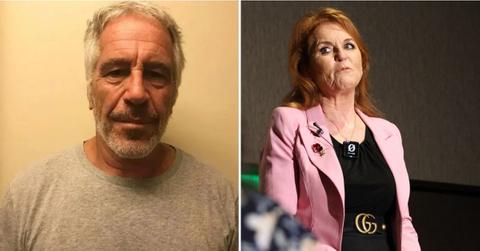
What Young Jeffrey Epstein Did: Disturbing Sex Tapes Leaked Online!
When the US Department of Justice released over 3 million files related to Jeffrey Epstein, few could have anticipated the disturbing revelations that would follow. Among the thousands of documents, photographs, and videos released were materials that paint a horrifying picture of Epstein's activities and the network he cultivated. But what exactly did these files contain, and why are they causing such controversy?
The Epstein case has captivated public attention for years, with many questioning how a convicted sex offender managed to maintain connections with high-profile individuals while operating what prosecutors described as a vast exploitation network. The recent document release has reignited these questions and introduced new ones, particularly regarding the disturbing sexual content that has allegedly leaked online.
Biography of Jeffrey Epstein
Jeffrey Edward Epstein was born on January 20, 1953, in Brooklyn, New York, and died on August 10, 2019, in his Manhattan jail cell under circumstances that remain controversial.
Full Name: Jeffrey Edward Epstein
Born: January 20, 1953, Brooklyn, New York
Died: August 10, 2019 (aged 66), Manhattan, New York
Education: Cooper Union (dropped out), Courant Institute of Mathematical Sciences at NYU (attended)
Occupation: Financier, convicted sex offender
Known For: Sex trafficking and conspiracy charges, high-profile connections
Criminal Status: Deceased (ruled suicide by hanging)
Convictions: 2008: Solicitation of prostitution from a minor (Florida); 2019: Sex trafficking of minors (New York)
The DOJ Document Release: A Massive Archive
What Was Included in the Epstein Files?
On February 2, 2026, the US Department of Justice released thousands of files it holds on the late sex offender and disgraced financier Jeffrey Epstein. This massive document dump, part of what's been termed the "Epstein Files Transparency Act," represents one of the most significant releases of law enforcement materials in recent history.
The archive includes over 3 million files, comprising documents, photographs, diagrams, and video footage. Among the materials is a diagram prepared by the FBI attempting to chart the network of Epstein's victims and the timeline of their alleged abuse. This visual representation, photographed on February 2, 2026, attempts to map the complex relationships and chronological patterns of exploitation.
The sheer volume of material suggests that the investigation into Epstein's activities was far more extensive than many realized. The disclosure of these files has prompted questions about officials' contentions that there aren't other men involved in his sexual abuse, with many observers noting that the documents suggest a much broader network of complicity.
Disturbing Visual Evidence Emerges
Among the thousands of records released by the Justice Department on Friday was an undated photo showing what appears to be a massage room with images of naked women on the walls. This single image provides a glimpse into the environments where Epstein allegedly conducted his exploitative activities.
More troubling still are the videos that have surfaced. Newly released files tied to convicted sex offender Jeffrey Epstein include damning videos showing him chasing what appear to be little girls. These videos, described as disturbing by those who have viewed them, represent some of the most graphic evidence in the entire archive.
The Epstein files released by the Justice Department include hours of video footage Jeffrey Epstein recorded, received, or downloaded. This footage ranges from surveillance recordings from his properties to what appear to be personal recordings of his interactions with victims. The free press has compiled it all, creating a comprehensive database of the materials for public access.
The Online Leak Controversy
Unredacted Materials Circulating Online
Despite warnings from US officials about failures in redaction, unredacted images and videos showing nudity released in the Epstein files have been online for days. Legal experts have raised serious concerns about this breach, noting that the exposure of unredacted materials could further traumatize victims and compromise ongoing investigations.
Lawyers representing victims have stated that these failures in redaction have caused additional harm, as explicit content that was supposed to be protected has been widely distributed across various platforms. The rapid spread of these materials online has created a situation where controlling the distribution of sensitive content has become nearly impossible.
The Scope of Available Materials
This site houses materials responsive under the Epstein Files Transparency Act, serving as a central repository for the documents released by the Department of Justice. The site will be updated if additional documents are identified for release, suggesting that the current archive may expand over time.
Some of the library's contents include descriptions of sexual assault and other disturbing content. As such, users are advised that certain portions of this library may not be appropriate for all readers. This warning underscores the graphic and potentially triggering nature of the materials contained within the archive.
Understanding the Network Diagram
FBI's Attempt to Chart the Abuse
One of the most revealing documents in the release is the FBI diagram photographed on February 2, 2026, which attempts to chart the network of Epstein's victims and the timeline of their alleged abuse. This visual representation provides investigators' perspective on how Epstein's exploitation network operated over time.
The diagram likely includes connections between victims, locations where abuse occurred, and potentially identifies other individuals involved in facilitating or participating in the abuse. Such visual tools are crucial for investigators to understand complex criminal networks and identify patterns that might not be apparent from narrative descriptions alone.
Timeline of Alleged Abuse
The timeline component of the FBI diagram would show how Epstein's activities evolved over the years, potentially revealing patterns in victim recruitment, geographic movement, and operational changes. Understanding this timeline is crucial for comprehending how Epstein managed to operate for so long without facing more severe consequences earlier in his criminal career.
The Massage Room Evidence
Environment of Exploitation
The undated photo showing a massage room with images of naked women on the walls provides insight into the environments Epstein created for his exploitation activities. Such spaces were likely designed to normalize sexual content and create atmospheres where abuse could occur more easily.
The presence of explicit imagery in what appears to be a professional setting (a massage room) suggests a deliberate attempt to blur boundaries and create environments where sexual exploitation could be disguised as legitimate services. This tactic of normalizing sexual content in various settings is a common feature in trafficking and exploitation operations.
Documentation of Locations
Photographs of physical spaces connected to Epstein's activities serve as important documentation for investigators and provide context for understanding how his operations functioned. These images help establish the physical reality of locations where abuse occurred, moving beyond abstract descriptions to concrete visual evidence.
The Video Footage Controversy
Hours of Recorded Content
The Justice Department files include hours of video footage Jeffrey Epstein recorded, received, or downloaded. This extensive video archive represents one of the most significant components of the evidence against Epstein and potentially against others who may be implicated in his activities.
The range of footage—from surveillance recordings to personal videos—suggests multiple purposes for the recordings. Some may have been for security purposes, while others appear to document illegal activities. The existence of such extensive video archives raises questions about who else might appear in these recordings and what legal implications could arise from their contents.
Disturbing Content Description
Newly released DOJ files reveal disturbing videos of Epstein engaging in behavior that witnesses have described as predatory. The specific content, while not detailed here due to its graphic nature, has been characterized by legal experts and journalists who have reviewed the materials as among the most disturbing evidence in the entire archive.
The release of such graphic content has sparked debate about the balance between transparency in law enforcement investigations and the protection of victims from further trauma through the public distribution of explicit materials.
Legal and Ethical Implications
Redaction Failures and Their Consequences
The fact that unredacted materials have leaked online despite official warnings represents a significant failure in the document release process. Legal experts have noted that proper redaction is crucial when releasing sensitive law enforcement materials, particularly those involving sexual abuse and exploitation.
The consequences of these redaction failures extend beyond simple privacy concerns. Victims may be re-traumatized by the public distribution of materials that were supposed to be protected, and the integrity of ongoing investigations could be compromised by the premature release of sensitive information.
Ongoing Investigations and Future Developments
As this site will be updated if additional documents are identified for release, the current document archive represents a snapshot of an ongoing process. Investigators continue to review materials, and new documents may be added as they are identified and processed for release.
The extensive nature of the Epstein files suggests that investigations into his network and activities may continue for years to come. The materials released so far may only represent a portion of the total evidence collected by law enforcement agencies during their investigations.
Public Access and Responsibility
Navigating Sensitive Content
The warning that some portions of the library may not be appropriate for all readers reflects the serious responsibility that comes with accessing these materials. Users must consider whether they are prepared to encounter extremely graphic and potentially triggering content before choosing to review the documents.
For researchers, journalists, and members of the public interested in understanding the full scope of Epstein's activities, the archive provides unprecedented access to primary source materials. However, this access comes with the ethical responsibility to handle the materials appropriately and to consider the impact on victims and their families.
The Role of Media and Public Interest
The compilation of these materials by the free press represents an important function of journalism in providing context and analysis for complex document releases. Media organizations play a crucial role in helping the public understand the significance of these materials while also protecting sensitive information that could cause harm if widely distributed.
The public interest in the Epstein case remains high, driven by the involvement of high-profile individuals in his social and professional circles. The document release provides an opportunity for greater understanding of how Epstein operated and who may have been complicit in his activities.
Conclusion
The release of the Jeffrey Epstein files by the US Department of Justice represents a watershed moment in the ongoing effort to understand and address sexual exploitation networks. The documents, photographs, and videos contained in this massive archive provide unprecedented insight into how Epstein operated and the extent of his criminal activities.
From the FBI's network diagram attempting to chart the abuse to the disturbing videos that have leaked online, these materials paint a comprehensive picture of exploitation that went unchecked for years. The failures in redaction that have allowed graphic content to circulate online highlight the complex challenges involved in balancing transparency with victim protection.
As investigations continue and additional documents may be released, the Epstein case remains a stark reminder of how sexual exploitation can operate within elite circles while remaining hidden from public view. The archive created by this document release will likely serve as a crucial resource for researchers, investigators, and advocates working to prevent similar abuses in the future.
The disturbing sex tapes and other materials that have leaked online represent just a fraction of the evidence contained in the Epstein files. Their existence and the public's reaction to them underscore the ongoing societal struggle to confront sexual exploitation and hold powerful individuals accountable for their actions. As more people engage with these materials, the hope is that greater understanding will lead to better prevention and more effective responses to sexual abuse and trafficking.